

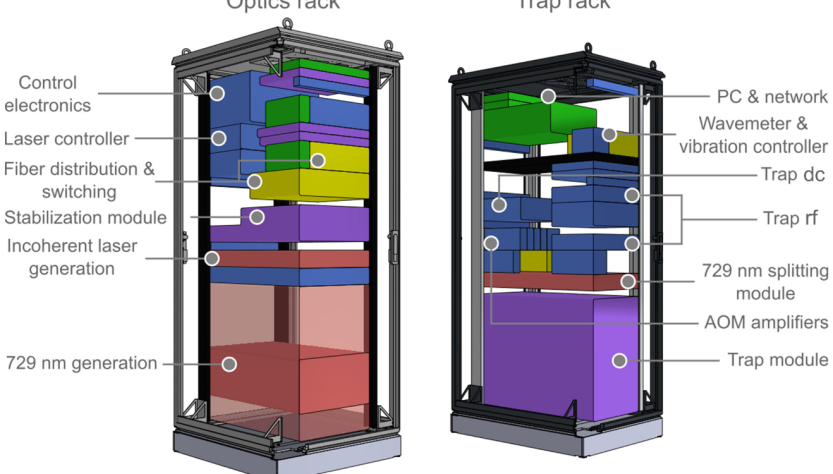
Quantum coherent control is revolutionizing the way we steer electrons using extreme ultraviolet light. This innovative method opens new doors in the field of quantum science and technology.
What is Quantum Coherent Control?
Quantum coherent control is a cutting-edge technique that enables researchers to manipulate quantum systems with precision. It involves the use of coherent light sources, such as lasers, to steer the behavior of electrons at the quantum level. This level of control allows scientists to explore various phenomena in quantum mechanics more effectively.
One of the significant advancements in this field is the use of extreme ultraviolet (EUV) light, which has been shown to enhance the ability to achieve quantum coherent control over electron dynamics. By employing EUV light, researchers can initiate and steer electronic transitions with remarkable accuracy, paving the way for new technologies in quantum computing and communication.
As the understanding of quantum coherent control deepens, its potential applications continue to expand, offering exciting possibilities for advancements in both theoretical and practical realms of physics.
Recent Advances in Electron Manipulation
Recent advances in electron manipulation have opened new avenues in the field of quantum coherent control. Researchers have successfully demonstrated the ability to steer electrons using extreme ultraviolet light, marking a significant milestone in the manipulation of quantum systems.
Key developments include:
- Precision Control: Techniques have improved, allowing for unprecedented precision in electron positioning and movement.
- Time-Resolved Measurements: Scientists can now capture transient electronic states, providing insights into ultrafast processes.
- Applications: Potential applications range from advanced materials to quantum computing, highlighting the versatility of quantum coherent control methods.
The ability to manipulate electrons in such a controlled manner not only enhances our understanding of quantum mechanics but also paves the way for innovations in technology and materials science.
The Role of Extreme Ultraviolet Light
The use of extreme ultraviolet (EUV) light plays a pivotal role in achieving quantum coherent control of electrons. This innovative approach allows scientists to manipulate electron dynamics with remarkable precision. By harnessing the unique properties of EUV light, researchers can create tailored electromagnetic fields that interact with electrons at quantum levels.
Key advantages of using EUV light include:
- High temporal resolution: EUV pulses can be generated in femtosecond durations, enabling real-time observation of electron motion.
- Selective excitation: This technique allows for the targeted manipulation of specific electronic states, enhancing control over quantum processes.
- Enhanced coherence: EUV light maintains the quantum coherence necessary for effective quantum coherent control.
These advancements signify a major leap forward in the field of quantum mechanics, opening new possibilities for future technologies.
Implications for Future Technology
The advancements in quantum coherent control are poised to revolutionize various fields of technology. By enabling precise manipulation of electrons, researchers anticipate significant breakthroughs in areas such as:
- Quantum Computing: Enhanced qubit control could lead to more reliable and faster quantum processors.
- Telecommunications: Improved signal processing through better electron dynamics may enable faster data transmission.
- Materials Science: Tailoring materials at the atomic level could result in the development of new substances with unique properties.
- Medical Imaging: Advanced imaging techniques may emerge from controlling electron behavior, enhancing diagnostic capabilities.
As researchers continue to explore the potential of quantum coherent control, the implications for future technology remain vast and transformative, promising a new era of innovation across multiple disciplines.
Challenges in Quantum Control
Despite the promising advancements in quantum coherent control, several challenges remain in the field. Researchers face significant hurdles in maintaining coherence over extended periods, which is crucial for practical applications.
Some of the primary challenges include:
- Environmental Noise: Quantum systems are highly sensitive to external disturbances, making it difficult to achieve stable control.
- Scalability: Current techniques for quantum coherent control are often limited to small systems, raising concerns about how to scale these methods for larger applications.
- Measurement Precision: Accurately measuring quantum states without introducing errors is a major obstacle that researchers continue to grapple with.
As scientists work to overcome these challenges, the potential of quantum coherent control to revolutionize technology remains tantalizingly close, but the path forward is fraught with complexity.
Expert Opinions on the Findings
Experts in the field have expressed varying opinions on the implications of recent findings concerning quantum coherent control. Dr. Emily Chen, a leading physicist, stated that “the ability to manipulate electrons precisely opens up new avenues for research and technology.” She emphasized the significance of achieving such control, which could lead to breakthroughs in quantum computing and materials science.
On the other hand, Dr. Raj Patel cautioned that while the results are promising, practical applications may still be years away. “The challenges in scaling quantum coherent control techniques must not be underestimated,” he noted. However, he remains optimistic about the potential improvements in electron manipulation methods.
Overall, the consensus among experts is that while further research is needed, the advancements in quantum coherent control represent a significant step forward in the understanding of electron dynamics.
Comparative Techniques in Electron Steering
As researchers explore advanced methods for steering electrons, several techniques have emerged alongside quantum coherent control. Each approach presents unique advantages and challenges that contribute to our understanding of electron dynamics.
- Classical Control: This method relies on traditional electromagnetic fields to guide electron paths. While effective, it often lacks precision due to thermal effects.
- Stochastic Control: Utilizing random processes, this technique can adapt to changing conditions, but its unpredictability can limit practical application.
- Quantum Coherent Control: This innovative method employs tailored laser pulses to manipulate electron states with high precision, offering significant advantages in speed and accuracy.
Comparatively, quantum coherent control stands out for its capability to achieve fine-tuned steering of electrons, making it a promising contender in the race for the best technique in electron manipulation.
Future Research Directions
As researchers delve deeper into the realm of quantum coherent control, several future research directions are emerging that could further enhance our understanding and application of this innovative technique.
- Improved Techniques: Developing more precise methods to achieve quantum coherent control will be essential for advancing electron manipulation.
- Integration with Other Technologies: Exploring how quantum coherent control can be integrated with existing technologies may lead to groundbreaking applications in various fields.
- Long-term Stability: Investigating the long-term stability of quantum states manipulated by coherent control is vital for practical implementations.
- Interdisciplinary Collaboration: Encouraging collaboration between physicists, engineers, and material scientists can foster innovative solutions and new perspectives.
Ultimately, these directions could determine whether quantum coherent control becomes the leading method in electron steering and manipulation.
By Authors of the study: I. Pogorelov, T. Feldker, Ch. D. Marciniak, L. Postler, G. Jacob, O. Krieglsteiner, V. Podlesnic, M. Meth, V. Negnevitsky, M. Stadler, B. Höfer, C. Wächter, K. Lakhmanskiy, R. Blatt, P. Schindler, and T. Monz via Openverse
References
Related stories
CA keys security concerns: Worst proven issues revealed · Samsung Galaxy Z Fold 7: Is It the Best Phone Yet? · Garmin CIRQA Smart Band: The Best Smart Upgrade for Fitness
