

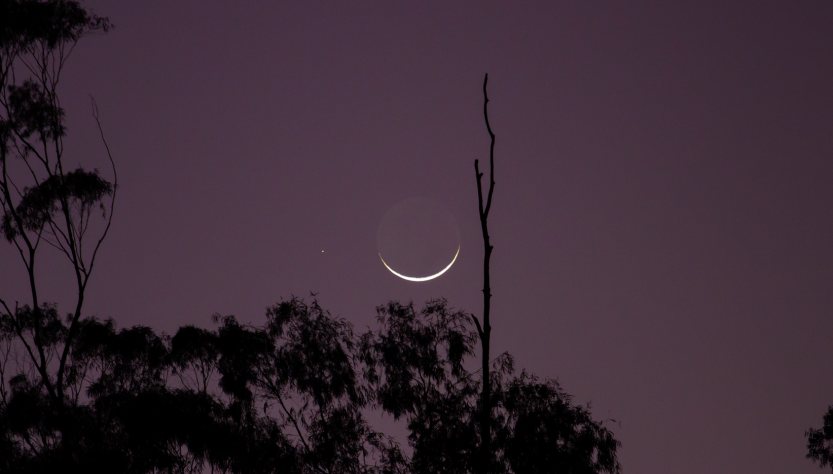
crescent Moon and Venus will be visible in the night sky this Monday. Stargazers should take advantage of this stunning celestial event.
When to See the Crescent Moon and Venus
The crescent Moon and Venus will be visible in the night sky, offering a stunning view for stargazers. To make the most of this celestial event, understanding the timing is essential.
On the evening of Monday, the crescent Moon will be located just above Venus, creating a beautiful sight for those looking up. The best time to catch this spectacle is shortly after sunset, when both the Moon and Venus will be low on the horizon. As twilight deepens, the contrast between the darkening sky and the bright celestial objects will enhance the viewing experience.
For optimal viewing, consider the following tips:
- Location: Find an area away from city lights to reduce light pollution.
- Timing: Aim to observe shortly after sunset, around 6:00 PM local time, when the sky is still illuminated.
- Equipment: While the naked eye is sufficient, binoculars or a telescope can provide a closer look at the crescent Moon’s surface and Venus’s brilliance.
- Weather: Check the weather forecast to ensure clear skies for the best viewing conditions.
Mark your calendar for this special evening and enjoy the enchanting sight of the crescent Moon and Venus lighting up the night sky.
Best Viewing Locations
Finding the perfect spot to view the crescent Moon and Venus can significantly enhance your experience. Here are some tips on the best viewing locations:
- Parks and Open Spaces: Look for local parks or open fields away from city lights. These areas provide unobstructed views of the night sky, allowing you to fully appreciate the beauty of the crescent Moon and Venus.
- Rooftops: If you live in an urban area, consider accessing a rooftop. Elevation can reduce light pollution, providing a clearer sight of celestial events.
- Beaches and Lakeshores: Waterfront locations can offer stunning reflections of the crescent Moon and Venus on the water, creating a picturesque view during your nighttime outing.
- High Elevation Areas: If you have the opportunity, visit a nearby mountain or hill. Higher altitudes often have clearer skies, making it easier to spot astronomical phenomena.
- Astrophotography Spots: Some locations are specifically known for stargazing and astrophotography. These spots typically have minimal light interference, making them ideal for viewing the crescent Moon and Venus.
Ensure to check local weather conditions before heading out, as clear skies are essential for a successful viewing experience.
Astronomical Significance of This Event
The alignment of the crescent Moon and Venus offers a unique opportunity for skywatchers and astronomy enthusiasts alike. This celestial event is not only visually stunning but also holds significant astronomical importance.
Venus, often referred to as the “Evening Star,” is one of the brightest objects in the night sky, second only to the Moon. Its proximity to Earth and reflective cloud cover make it an ideal target for both amateur and seasoned astronomers. When paired with the delicate crescent Moon, the two create a breathtaking sight that can captivate anyone looking up.
From an astronomical perspective, these occurrences provide a chance to study the phases of the Moon and the positioning of planets. Observing the crescent Moon and Venus together allows for the examination of their brightness and dynamics in relation to one another. It serves as a reminder of the vastness of our solar system and the intricate dance of celestial bodies.
Furthermore, such events can help foster public interest in astronomy. They encourage people to engage in stargazing and learn more about the science behind the phenomena. By taking a moment to look up, individuals can appreciate the beauty and significance of our night sky.
In conclusion, the appearance of the crescent Moon alongside Venus is more than just a pretty sight; it is a celebration of our universe’s wonders.
Tips for Stargazing
As you prepare to observe the crescent Moon and Venus, consider these helpful tips to enhance your stargazing experience.
- Choose the Right Time: The best viewing times for the crescent Moon and Venus are just after sunset or before sunrise. The contrast between the darkening sky and the bright celestial objects will be most striking during these periods.
- Find a Dark Location: Light pollution can significantly diminish your stargazing experience. Seek out locations away from city lights, such as parks or open fields, to get the clearest view of the night sky.
- Use Binoculars: While the crescent Moon and Venus are visible to the naked eye, binoculars can provide a more detailed view. They allow you to see the Moon’s craters and Venus’s phases, making the experience more enjoyable.
- Check the Weather: Clear skies are essential for optimal viewing. Before heading out, check the weather forecast to ensure there are no clouds obstructing your view.
- Be Patient: Sometimes, celestial events take a moment to reveal their beauty. Give your eyes time to adjust to the darkness and enjoy the peacefulness of the night.
By following these tips, you can make the most of your opportunity to witness the stunning crescent Moon and Venus in the night sky.
Upcoming Celestial Events
The night sky is set to dazzle stargazers with a series of upcoming celestial events that promise to captivate both amateur and seasoned astronomers alike. Among these events, the crescent Moon and Venus will take center stage, offering a beautiful sight for all who take the time to look up.
In the coming weeks, several notable occurrences will enhance the stargazing experience:
- October 15: The crescent Moon will appear just above Venus, creating a stunning visual pairing that will be visible shortly after sunset.
- October 22: A conjunction of Mars and the Moon will occur, providing an excellent opportunity to see both celestial bodies in close proximity.
- November 5: The Leonid meteor shower will peak, offering a chance to witness shooting stars streaking across the sky.
- November 19: A partial lunar eclipse will take place, allowing viewers to see the Earth’s shadow cast a unique silhouette across the Moon.
Each of these events presents a perfect chance for stargazers to appreciate the beauty of the night sky. Whether it’s the enchanting crescent Moon and Venus or the thrill of meteors, these celestial happenings are not to be missed. Mark your calendars and prepare for an astronomical adventure!
Photo by Dennis Ariel on Pexels
Sources
Related stories
Temporal Valuation Increase: Proven Strategies for Success · Foldable iPhone: Best Features and Proven Price Insights · Apothecary Diaries Trailer: Is It the Best Game Reveal Yet?
